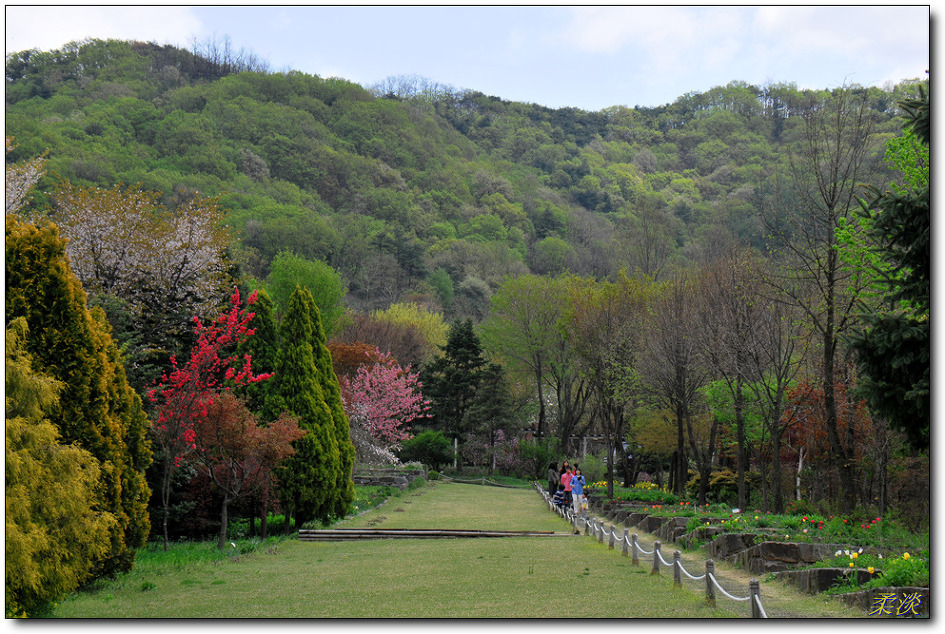
It’s Wesak Day.
Millions of people around the globe are celebrating this memorable day, but, I am not writing this piece in the memory of Him. Instead, I am writing it in the memory of my mother.
Wesak Day brings up faint memory of my mother who had departed more than twenty years ago. My mother was not a devout Buddhist. She didn’t declare herself as a Buddhist either. But she went to temple once a year, in Wesak Day. So I consider her as such.
In Korea, large population do not really define themselves with any religion. It doesn’t mean they are atheists. But loosely consider as Buddhists if you try to nail them of their religious orientation. My mother was one of them.
Last dynasty of Korea was Confucianism based. So its influences are strongly embedded in every ways of life till now. Then, they do not consider Confucianism as religion, but, rather as a philosophy or a way of life. So subtract Christians or other new religions…the rest are Buddhists because Confucianism is still closer with Buddhism.
Every Wesak Day, she will dress up nicely and go to temple; lighting lamps, listen to chanting, participate in prayer, and enjoy temple vegetarian meals. Whenever she came back after that, there was special glow in her for days… That’s how I associate Wesak Day with my mother. Every Wesak Day, I remember my mother, rather than Sakyamuni Buddha. Because, it was one of rare days in her life that made her happy. Most other days, she was in pain. Her life was not an easy one. So in Wesak Day, I can remember my mother’s happy looks, instead of her sadness.
Of recently, one of my long time yoga students lost her beloved mother. I went to pay my respect. It’s never easy, no matter how old we are, to lose mother. Seeing her clad in nice costume in a coffin, I felt chill running through my spine, the same chill feeling I felt with my mother, and with another dear students moms one and half years ago. They departed the world, but, somehow they continue to live on in our daughters’ hearts no matter how long it had been. Maybe it’s special bonding between woman to woman that we girls only can understand…
Thus, when I think of Sakyamuni Buddha, I relate more with his mother, Lady Maya, who had to depart the world just 7 days after giving birth to him. Her pain as a mother who had to leave her son is direr to me in Wesak Day….
Mother’s day is around the corner again… While millions of devotees celebrating the birth of Buddha, we yoga girls…why not we celebrate our mothers instead…? If they are still around with you, you are the lucky ones. If they are not, then, will you join me to celebrate Wesak Day in the memory of our mothers???
Happy Wesak Day!
In the abode of abundance and joy!
Friday, May 4, 2012
Sunday, June 26, 2011
Yoga Story 8. Anjaneyasana (Lunge Pose)

It seems some of the simplest wishes in life are getting harder to get granted these days. For example, getting a bull’s-eye-shot at the Cupid’s arrow for marriage or producing a bundle-of-joy even after marriage are no easy matters anymore. Particularly, rising infertility issues among married couples are so dire that seeking IVF treatments are talked over lunch like norms. God must be going out of business due to high tech medical interventions nowadays…
In old days however, when women had difficulty in progeny, they used to pray. Not just wish-wash kinds of wimpy prayers, but hard ones at that, like embarking on one-hundred days of fasting combined three thousand daily kneeling in the moonlights…then somehow they could be endowed with a brilliant son or daughter in the end. That was God’s ways of testing the seriousness and readiness of women’s desire to be mother before. Now it seems obstetric specialists are replacing the God’s role. Because not many modern women have such patience and determination to wait until God answers her prayers…
In Yoga mythology, there are number of stories related to difficult progeny and magical births. One such story is about Anjana, the mother of beloved monkey-god Hanuman.
The Lunging Yoga Pose, Anjaneyasana, named after her arduous spiritual penance, is a deep, kneeling lunge that stretches the psoas muscle, which runs from the middle of the spine to the inner thigh. This very deep core muscle is pivotal in the fight-or-flight response that is built into our bodies. For many people, the fight-or-flight response is almost continuously stimulated by our on-going low-grade application of stress, by our daily habit of sitting for long periods of time on chairs, and results in a chronically locked psoas. Because of its relation to the fight-or-flight response, which typically engages when we are fearful, the psoas is where we generally hide fear. The process of opening the psoas gives us an opportunity to physically shed our fears and move into a state of fearlessness.
According to the story,
“Anjana was a beautiful woman who deeply desired to become a mother, so she prayed daily for the miracle of a child. The wind god Vayu admired Anjana very much, and when he heard her prayer, he decided to help her out. He blessed a few grains of rice and sent them with his bird friends, who were flying her way. Anjana was engaged in her daily prayer ritual. She had her arms stretched upward in anjali mudra, ready to receive the grace of God, when she received a few grains of rice instead. She knew better than to question what came to her through prayer, so she opened her mouth and tossed in the rice. Upon her consumption of the blessed rice, she became pregnant.
When her baby Anjaneya (which meant “son of Anjana”) was born, he was quite a precocious youngster. He was half mortal and half divine, since Vayu was his father. His demigod status is what often led him into big trouble. One morning Anjaneya woke up and saw what he thought was a giant mango floating in the sky. Since mangoes were his favorite treat, he immediately leapt up into the sky and rushed toward the fruit, not realizing it was actually the sun. When the sun god Surya saw this little troublemaker racing to take a big bite out of him, he threw a lightning bolt, which hit the boy in the jaw, killing him instantly and sending him tumbling to the ground.
When Vayu learned what Surya had done, his great fury made him take a deep breath. It was so deep that he sucked up all the air from the earth, and all the beings began to suffocate. The gods called an emergency meeting to try and placate both Vayu and Surya and restore order. Vayu refused to exhale until he got his son, Anjaneya, back. But Surya didn’t want his potentially dangerous child running around unrestrained.
Finally, an agreement was reached. Anjaneya would be renamed Hanuman, which referred to the broken jaw he received from the lightning bolt (hanu means “jaw” in Sanskrit). He would be revived, but cursed with short-term memory so that he would never recall his godliness long enough to cause any real harm. If he believed himself to be just a mortal, what damage could he possibly do?
And finally, he would be removed from his mother’s care so that he could start a new life. The trusted monkey king, Sugriva, agreed to take Hanuman under his wing, and the little boy took the shape of a monkey to better match his new family.”
Now this Hanuman is no ordinary monkey, who was to leave mother’s bosom and forget his godly nature for time-being, so that God could prepare him for his life’s grand mission to assist Ram, the greatest hero in the history of ancient India. Anjana, on the other hand, although she loved her son dearly, has to let go of him so that he could become a man of the world to fulfill his divine mission. In Anjanasana, we can access her fearless energy by thrusting our reluctant psoas muscle inside hip toward floor while folding palms into anjali mudra toward sky to indicate our surrender of inhibition and fear. Behind a heroic son like Hanuman, there is a heroic mother like Anjana. A fearless mother and ardent devotee like her is the lost role model for our modern mom-wanna-be. For more about Hanumanasana in the next story…
Monday, May 30, 2011
Yoga Story 7. The Shadows of Sani, the true beacon for everlasting happiness
The Ganesha story that I have posted previously, in how Ganesha was ended up with the elephant head, is the most well known version of its myths. However there is another version that is not the usual story where it was cut by his father Siva but caused by the Sani (Saturn). This story has more of astrological origin that is directly related to the nature of Saturn, the planet of longevity and lasting happiness with discipline and humanity as the prerequisite price. The unfolding story is,
“Lord Sani was desirous of seeing Lord Ganesha after hearing his birth. So he went to the mountain Kalias, the abode of Lord Siva and his family. The proud Mother Parvati was holding the child and other invited guests were adoring the gorgeous child. Sani before getting the audience saluted all the Lords—Krishna, Siva, Brhama, Dharma and Sun, and obtained their permission to visit the baby Ganesha.
When he was standing before Mother Parvati, his head bowed down and was avoiding looking directly at her or the baby. Mother Pravati felt offended by Sani’s strange behavior and asked “why are you not looking at me and my child?” Then Sani explained his wife put on him a curse that whomsoever he would look would get destroyed, since he forgot to honor her after his outdoor period, as he was engrossed in the thought of Lord Krishna.
Having heard this all the gods and dancers broke into laughter and Mother Parvati instructed him to see the child. Sani was in a dilemma and however glanced at the child from the corner of his eyes.
Immediately the child’s head got separated from the head and the bleeding headless child was in the mother’s lap. Everybody was in panic and the mother started weeping bitterly. Lord Krishna went to the river Pushpamudra, where a male elephant was sleeping with its female elephant, keeping its head in the northern direction. These two were surrounded by baby elephants.
Lord Krishna cut off the head of the elephant with his Sudarsan cakra, and put it on his mount, the Garuda. Meanwhile the female elephant got up and addressed Lord Krishna, her prayer. The elephant having touched the feet of the Lord got the blessings of long life a Kalpa. Then the Lord rushed to Kalias put the head on the little Ganesha and granted the life force. He also consoled Mother Parvati who took back Ganesha in this form and nursed.”
Among those who know astrology, Saturn is the most dreaded planet by far, out of the nine planets (Sun, Moon, Mars, Mercury, Jupiter, Venus, Saturn, Rahu and Ketu). While every planet is adorned and revered with their virtues and merits mostly; the Saturn is feared and avoided by at all cost, because of its associated nature being discipline and misfortune. However enduring happiness and glory also comes from Saturn’s slow and steady nature, unlike fast and quick ones like that of Mercury, or flirting and transient ones of Venus, etc.
Have you ever seen anyone, who keeps going up but never falls? Have you ever heard anyone whose lives are colored only with roses but not thorns? Fortune and misfortune go hand in hand. Without pain or sweat, we don’t know how to appreciate what goodness is. Saturn is the shadow of everyone, gods or humans alike. No one can escape from its gaze.
And yet, Saturn is in fact the most misunderstood and unfairly treated planet of all. We all love to hear and be inspired by those bitter sweet success stories, of those after enduring much pains and adversaries only to rise above all challenges. The focus, determination and willingness that are required for any significant achievements in life are all Saturn’s quality in nature. And yet we tremble at the mere sight of Saturn when he comes to knock our door. Sweat, pains, tolerance, discipline that are inevitable parts of growing process for human life…but just by mere mentions of them many would shy away, and wonders why they always feel lousy and are walking like a dead man in their alive but lifeless body, mind and spirit.
In Yoga, Saturn governs our life force, prana, and lots of pranayam exercises…that is the sure way to ensure his blessings. No one can be spared when Saturn put his gaze on. But if you do not challenge him directly, and instead welcome him with the way he looks away from you, then, no major disaster of getting heads knocked kind would happen. When he come to your door, then, just let him hang around for a while in the way he wants. Then his departing gifts are lasting happiness, longevity and success…
“Lord Sani was desirous of seeing Lord Ganesha after hearing his birth. So he went to the mountain Kalias, the abode of Lord Siva and his family. The proud Mother Parvati was holding the child and other invited guests were adoring the gorgeous child. Sani before getting the audience saluted all the Lords—Krishna, Siva, Brhama, Dharma and Sun, and obtained their permission to visit the baby Ganesha.
When he was standing before Mother Parvati, his head bowed down and was avoiding looking directly at her or the baby. Mother Pravati felt offended by Sani’s strange behavior and asked “why are you not looking at me and my child?” Then Sani explained his wife put on him a curse that whomsoever he would look would get destroyed, since he forgot to honor her after his outdoor period, as he was engrossed in the thought of Lord Krishna.
Having heard this all the gods and dancers broke into laughter and Mother Parvati instructed him to see the child. Sani was in a dilemma and however glanced at the child from the corner of his eyes.
Immediately the child’s head got separated from the head and the bleeding headless child was in the mother’s lap. Everybody was in panic and the mother started weeping bitterly. Lord Krishna went to the river Pushpamudra, where a male elephant was sleeping with its female elephant, keeping its head in the northern direction. These two were surrounded by baby elephants.
Lord Krishna cut off the head of the elephant with his Sudarsan cakra, and put it on his mount, the Garuda. Meanwhile the female elephant got up and addressed Lord Krishna, her prayer. The elephant having touched the feet of the Lord got the blessings of long life a Kalpa. Then the Lord rushed to Kalias put the head on the little Ganesha and granted the life force. He also consoled Mother Parvati who took back Ganesha in this form and nursed.”
Among those who know astrology, Saturn is the most dreaded planet by far, out of the nine planets (Sun, Moon, Mars, Mercury, Jupiter, Venus, Saturn, Rahu and Ketu). While every planet is adorned and revered with their virtues and merits mostly; the Saturn is feared and avoided by at all cost, because of its associated nature being discipline and misfortune. However enduring happiness and glory also comes from Saturn’s slow and steady nature, unlike fast and quick ones like that of Mercury, or flirting and transient ones of Venus, etc.
Have you ever seen anyone, who keeps going up but never falls? Have you ever heard anyone whose lives are colored only with roses but not thorns? Fortune and misfortune go hand in hand. Without pain or sweat, we don’t know how to appreciate what goodness is. Saturn is the shadow of everyone, gods or humans alike. No one can escape from its gaze.
And yet, Saturn is in fact the most misunderstood and unfairly treated planet of all. We all love to hear and be inspired by those bitter sweet success stories, of those after enduring much pains and adversaries only to rise above all challenges. The focus, determination and willingness that are required for any significant achievements in life are all Saturn’s quality in nature. And yet we tremble at the mere sight of Saturn when he comes to knock our door. Sweat, pains, tolerance, discipline that are inevitable parts of growing process for human life…but just by mere mentions of them many would shy away, and wonders why they always feel lousy and are walking like a dead man in their alive but lifeless body, mind and spirit.
In Yoga, Saturn governs our life force, prana, and lots of pranayam exercises…that is the sure way to ensure his blessings. No one can be spared when Saturn put his gaze on. But if you do not challenge him directly, and instead welcome him with the way he looks away from you, then, no major disaster of getting heads knocked kind would happen. When he come to your door, then, just let him hang around for a while in the way he wants. Then his departing gifts are lasting happiness, longevity and success…
Monday, May 16, 2011
Yoga Story 6. Virabhadrasana (Warrior Pose)
One of the main effects that come when you practice yoga for sometimes is bravery and fearlessness in the way how we carry ourselves. There is also significant increase in our mental and physical focus that somehow we become less tolerant to our forever-busy-for-nothing in the hassled modern lifestyles. So without even going through the whole lots of self-help books in how to simplify our life, we just start to get more organized, systematic and prioritize what is more important from what isn’t. Thus life becomes less burdensome but more spontaneous expression of our joyous being; sharing happiness and gifts brought forward deep within the hearts. I feel most grateful to the yogic path I have been shown thus far, to be able to face any life’s challenges without fear and hesitations, but instead with courage and willingness. I suppose I became a quiet warrior without intending to. And I like it much better this way than playing a delicate princess or a queen that, as little girls we are led to fancy through fairytales…
The three variations of the Warrior Poses (I, II, III) are the most iconic Yoga poses among all Yoga Asanas. The first warrior pose raises its energy from the front with arms up over head, the second spreads sideways with arms outstretched, and the third balances forward with arms stretched forward parallel with the floor. All of them are mighty, fierce and strong standing poses that illustrates the power and ferocity of the warrior.
The warrior poses are physical and symbolic of warrior energy in that they require considerable strength in the muscles of the legs, which symbolize virility and power. And yet, at the same time, all three warrior poses demand that the chest and heart are remain open. The arms and legs are active, while the heart center, when open, banishes the fear of death.
In the yoga mythology, Virabhadra is the name of a warrior-devotee of Shiva, the lord of cosmic destruction and freedom bestowal. He was created from Shiva’s top-hair dreadlock out of his hot temper to make it even with Daksha, his father-in-law, who had committed the terrible sins of infuriating Shiva. According to the story,
“The great Shiva’s consort Shakti has many incarnations, as the gods often do, and one of her many lifetimes, she was known as Sati that was born to a mortal father named Daksha. Sati was incredibly beautiful and wholly devoted to Shiva. However, Daksha wasn’t a huge fan of Shiva, who is covered in ash, also known to have a bad temper and sat in meditation for thousands of years on top of a remote mountain. Not to mention his choice of clothing, which was pretty scant. Nonetheless, Sati’s heart was set upon Shiva while she was growing up and when came to her age to choose her marriage partner, she wanted no one but Shiva. Daksha had no choice but to give his lovely princess to the god he despised so much. But Daksha kept his contempt against Shiva even after Sati and Shiva were wed and living happily on the mountaintop.
One day, Daksha threw a grand party inviting all the gods and men of rich, except Shiva, which was an insult of the highest order. Sati became very upset that her father still would not accept the choice that made her happy. During the party, Sati appeared before her father with a saddened face and sorrow in her heart. All the guest turned to see Daksha’s beautiful daughter standing and weeping before him. Daksha, who loved his daughter very much, was distraught to see her so upset but stood by his decision to continue reject Shiva as her partner. Sati’s fury and great sadness ignited a fire that burned so brightly inside her that she went up in flames right in the middle of the party and was reduced to a pile of ashes before her father’s very eyes.
When Shiva came to know of what had happened, he became absolutely furious. In his fury and rage, he ripped off a dreadlock from his head, and this dreadlock snaked into the earth all the way down through the mountain, only to emerge in the center of the party, right in the very spot where Sati’s ashes lay. The dreadlock was transformed into Virabhadra, the great warrior, who rose out of the ground (visualize the warrior I pose, rising up with arms up overhead), drew his sword (visualize warrior II with arms open), and slice off Daksha’s head. When it fell to the ground, Virabhadra bent to pick it up and reached forward to place it upon a stake (think warrior III, arms reaching forward). This shocking act caused quite a uproar among the partygoers, who tried to flee the scene because they feared for their own heads.
In the world of the gods, things can happen almost instaneously, and this dire situation required the great Sati to secure another form very quickly so she could go reason with Shiva. She donned a new body and showed up at the party again, but this time, she scolded Shiva for beheading her father. “Look at what you have done!” she exclaimed to Virabhadra, knowing that Shiva would hear her on the mountaintop. “I know my father didn’t do a kind thing, but it wasn’t your place to step into the middle of it and kill him. Do you think that is going to solve our problem and make him accept you?” Shiva hadn’t really thought of that. He was just so angry at Daksha, he didn’t really consider how Sati would feel or that it would start a dramatic chain of events that would actually make things worse, not better. The problem was, he hadn’t thought at all. Sati demanded, “Make this right, right now!”
Well, Shiva himself arrived at the party, where a few lone partygoers were peering from behind trees to see what the great would do. He came marching in with his trident in hand and waved Virabhadra aside to keep him at bay. Shiva looked around and realized immediately that Daksha’s head was not suitable for reattachment, so he found the nearest replacement, which happened to be a goat. Off came the head of the goat, and onto Daksha’s body it went. Shiva breathed a great exhale, and life returned to a Daksha’s body. The object of his rage was standing in front of him, but Daksha suddenly felt grateful that Shiva had realized the error of his ways and made amends. In his gratitude, and with the realization that he had not behaved in a dignified way toward Shiva, Daksha held one final party and made Shiva and Sati his guests of honor.”
So Sati, the gorgeous and beautiful princess, despite the great love and respect she hold towards her father and beloved, and yet, was brave, firm and defiant when it came to setting things right. Even the great Shiva couldn’t argue with her. A true warrior as she is in her heart, maybe it will do good to those who hasn’t outgrown of princess dream to emulate Sati. Then life can be truly “happily ever after!”
The three variations of the Warrior Poses (I, II, III) are the most iconic Yoga poses among all Yoga Asanas. The first warrior pose raises its energy from the front with arms up over head, the second spreads sideways with arms outstretched, and the third balances forward with arms stretched forward parallel with the floor. All of them are mighty, fierce and strong standing poses that illustrates the power and ferocity of the warrior.
The warrior poses are physical and symbolic of warrior energy in that they require considerable strength in the muscles of the legs, which symbolize virility and power. And yet, at the same time, all three warrior poses demand that the chest and heart are remain open. The arms and legs are active, while the heart center, when open, banishes the fear of death.
In the yoga mythology, Virabhadra is the name of a warrior-devotee of Shiva, the lord of cosmic destruction and freedom bestowal. He was created from Shiva’s top-hair dreadlock out of his hot temper to make it even with Daksha, his father-in-law, who had committed the terrible sins of infuriating Shiva. According to the story,
“The great Shiva’s consort Shakti has many incarnations, as the gods often do, and one of her many lifetimes, she was known as Sati that was born to a mortal father named Daksha. Sati was incredibly beautiful and wholly devoted to Shiva. However, Daksha wasn’t a huge fan of Shiva, who is covered in ash, also known to have a bad temper and sat in meditation for thousands of years on top of a remote mountain. Not to mention his choice of clothing, which was pretty scant. Nonetheless, Sati’s heart was set upon Shiva while she was growing up and when came to her age to choose her marriage partner, she wanted no one but Shiva. Daksha had no choice but to give his lovely princess to the god he despised so much. But Daksha kept his contempt against Shiva even after Sati and Shiva were wed and living happily on the mountaintop.
One day, Daksha threw a grand party inviting all the gods and men of rich, except Shiva, which was an insult of the highest order. Sati became very upset that her father still would not accept the choice that made her happy. During the party, Sati appeared before her father with a saddened face and sorrow in her heart. All the guest turned to see Daksha’s beautiful daughter standing and weeping before him. Daksha, who loved his daughter very much, was distraught to see her so upset but stood by his decision to continue reject Shiva as her partner. Sati’s fury and great sadness ignited a fire that burned so brightly inside her that she went up in flames right in the middle of the party and was reduced to a pile of ashes before her father’s very eyes.
When Shiva came to know of what had happened, he became absolutely furious. In his fury and rage, he ripped off a dreadlock from his head, and this dreadlock snaked into the earth all the way down through the mountain, only to emerge in the center of the party, right in the very spot where Sati’s ashes lay. The dreadlock was transformed into Virabhadra, the great warrior, who rose out of the ground (visualize the warrior I pose, rising up with arms up overhead), drew his sword (visualize warrior II with arms open), and slice off Daksha’s head. When it fell to the ground, Virabhadra bent to pick it up and reached forward to place it upon a stake (think warrior III, arms reaching forward). This shocking act caused quite a uproar among the partygoers, who tried to flee the scene because they feared for their own heads.
In the world of the gods, things can happen almost instaneously, and this dire situation required the great Sati to secure another form very quickly so she could go reason with Shiva. She donned a new body and showed up at the party again, but this time, she scolded Shiva for beheading her father. “Look at what you have done!” she exclaimed to Virabhadra, knowing that Shiva would hear her on the mountaintop. “I know my father didn’t do a kind thing, but it wasn’t your place to step into the middle of it and kill him. Do you think that is going to solve our problem and make him accept you?” Shiva hadn’t really thought of that. He was just so angry at Daksha, he didn’t really consider how Sati would feel or that it would start a dramatic chain of events that would actually make things worse, not better. The problem was, he hadn’t thought at all. Sati demanded, “Make this right, right now!”
Well, Shiva himself arrived at the party, where a few lone partygoers were peering from behind trees to see what the great would do. He came marching in with his trident in hand and waved Virabhadra aside to keep him at bay. Shiva looked around and realized immediately that Daksha’s head was not suitable for reattachment, so he found the nearest replacement, which happened to be a goat. Off came the head of the goat, and onto Daksha’s body it went. Shiva breathed a great exhale, and life returned to a Daksha’s body. The object of his rage was standing in front of him, but Daksha suddenly felt grateful that Shiva had realized the error of his ways and made amends. In his gratitude, and with the realization that he had not behaved in a dignified way toward Shiva, Daksha held one final party and made Shiva and Sati his guests of honor.”
So Sati, the gorgeous and beautiful princess, despite the great love and respect she hold towards her father and beloved, and yet, was brave, firm and defiant when it came to setting things right. Even the great Shiva couldn’t argue with her. A true warrior as she is in her heart, maybe it will do good to those who hasn’t outgrown of princess dream to emulate Sati. Then life can be truly “happily ever after!”
Monday, May 2, 2011
Yoga Story 5. Natarajasana (Dancer Pose)
One day I saw a picture of pregnant dancer from a Korean magazine, wrapped in a white ciliate piece of cloth dancing in trance in bare foot while oblivious of her round and protruding belly. I remember myself thinking, either she must be crazy or just totally in bliss that didn’t care anything in the world except her dancing… But somehow she looked strangely mystic and fascinating to my young mind of barely twenty at the time.
She was an unorthodox, kind of a maverick in the highly conservative and traditional Korean dance world in those days. Yet she was successful exactly because of her daring and free spirited ways of dancing that was distinctively different than many others. She was also old (in her early forty at the time) for a dancer when most of other dancers were long ago to have retired. She took up dancing only in her late twenty and never stopped since then even when pregnant. As I read the interview article further, I also learned that she was the first Korean disciple of Osho Rajneesh, the controversial and flamboyant Indian Guru who rendered strong influence in the hippy generation. She dedicated her success to the practice of Yoga and the guru’s teachings. Another picture of her with Rajneesh at the corner somehow left ringing in my heart with certain longing and wanderlust.
It was then and there, my interest in Yoga and Indian mysticism began. I raved through any possible written materials in Korean about Yoga, Rajneesh and other Indian mystics. There weren’t many. I searched high and low with little success. One thing led me to another…even deciding to learn English so that I could go to India one day to meet Rajneesh. But then, it never happened because he passed away before I could even have a chance…Anyway life has always a way to eventually bring us to where we most want to be, but in completely different ways than we might expect or dream of initially. I have not managed to become a professional dancer like her or become the disciple of Rajneesh. But in the end, I did become a dancer of life and disciple of the original cosmic dancer, Shiva…
Shiva has many different personae that illuminate his essence. The most well known is his role as the King Dancer, or in Sanskrit, Nataraja. Natarajasna (Dancer Pose) is a standing balance posture that involves bending one knee and grasping the ankle or foot from behind. As we then lean forward and kick back with foot, an arm stretches forward to complete the pose. This pose is the physical embodiment of one of the many guises of Shiva.
In this guise he is commonly portrayed with snakes around his neck, dreadlocks standing on end, balancing atop a tiny dwarf, and encircled by a ring or fire.
Snakes are metaphors and frightening creatures for most of us that dangles from Shiva’s neck as he dances. The poison the cobra carries symbolizes the toxic nature of ignorance, the misunderstanding of ourselves as something other than divine that is represented by the tiny dwarf-like demon upon which he stands. The remedy to that affliction, which is enlightened knowledge and he carries its symbolic flame in one of his palms.
Shiva’s world-destroying dance is potent symbol that can be understood both cosmologically and psychologically. He performs the dance of destruction that destroys the universe. This is also the dance of knowledge that takes us from the unreal to the real, from the ignorance to the knowledge, from the ego to the Self. From a yogic perspective, the dance disentangles all the mental webs by which we have imprisoned ourselves in patterns and habits throughout our lives that don’t serve us, but rather inhibit us. Shiva, as Nataraja, is the destroyer of our delusions and illusions.
Yoga seeks to rid us of the ignorance through various practices, such as asana, pranayam, and meditation, and by constantly reminding us of the fact that we are all divine in nature. Still we constantly forget, fall prey to the poison of ignorance, the dwarf. This seemingly helpless creature is usually busy causing mischief, which mainly consists of keeping us all caught up in our own daily dramas. Shiva does not let this little character get the best of him and instead uses him as a pedestal for his dance. By standing over the demon of ignorance, he is able to have a higher gaze, or higher level of consciousness, which allows him to rise above daily drama by just paying attention to the rhythm of his dance.
Where there is beginning, there is end; where there is creation, life, there is dissolution, death. Life and death exists hand-in-hand. But most of time we fear death while celebrate life. Because for ignorant, unenlightened mortals like us, death implies the end of everything we are familiar with in this limited physical reality. However, Shiva understands that destruction clears the path for rebirth and that in rebirth and growth there is compassion. Brahma the creator cannot do his work properly if Shiva the destroyer has not done his. It is Shiva’s destruction that provides the fertile platform for Brahma’s process of rebuilding.
Thus destruction is not something to be fear of but to be welcomed for changes to come about for individual growth as well as cosmic evolutionary process. Shiva is not filled with guilt over the destruction he causes. His focus, his detachment in carrying out the painful duties of what others fear the most, he does it by simply transmuting his true compassion into the cosmic dance he is engrossed in. He destroys everything that stagnates, holds or blocks in our obstinate limited vision. But that is true compassion for he only ignites the fire of true courage in us, so that we could face the adversity only to become equal to the divinity within us. Time and again, whenever I find myself falling into forgetfulness, torpor, and lose focus in the midst of busy, ever churning petty mind, to stray away from what is important, it is the Natarjasana I keep come back to, to find back the balance and necessary perspective to be up and bounty once again. Like the image of a dancer that captured my attention long ago, Shiva is the divine manifestation I find most resonation deep in my heart…
She was an unorthodox, kind of a maverick in the highly conservative and traditional Korean dance world in those days. Yet she was successful exactly because of her daring and free spirited ways of dancing that was distinctively different than many others. She was also old (in her early forty at the time) for a dancer when most of other dancers were long ago to have retired. She took up dancing only in her late twenty and never stopped since then even when pregnant. As I read the interview article further, I also learned that she was the first Korean disciple of Osho Rajneesh, the controversial and flamboyant Indian Guru who rendered strong influence in the hippy generation. She dedicated her success to the practice of Yoga and the guru’s teachings. Another picture of her with Rajneesh at the corner somehow left ringing in my heart with certain longing and wanderlust.
It was then and there, my interest in Yoga and Indian mysticism began. I raved through any possible written materials in Korean about Yoga, Rajneesh and other Indian mystics. There weren’t many. I searched high and low with little success. One thing led me to another…even deciding to learn English so that I could go to India one day to meet Rajneesh. But then, it never happened because he passed away before I could even have a chance…Anyway life has always a way to eventually bring us to where we most want to be, but in completely different ways than we might expect or dream of initially. I have not managed to become a professional dancer like her or become the disciple of Rajneesh. But in the end, I did become a dancer of life and disciple of the original cosmic dancer, Shiva…
Shiva has many different personae that illuminate his essence. The most well known is his role as the King Dancer, or in Sanskrit, Nataraja. Natarajasna (Dancer Pose) is a standing balance posture that involves bending one knee and grasping the ankle or foot from behind. As we then lean forward and kick back with foot, an arm stretches forward to complete the pose. This pose is the physical embodiment of one of the many guises of Shiva.
In this guise he is commonly portrayed with snakes around his neck, dreadlocks standing on end, balancing atop a tiny dwarf, and encircled by a ring or fire.
Snakes are metaphors and frightening creatures for most of us that dangles from Shiva’s neck as he dances. The poison the cobra carries symbolizes the toxic nature of ignorance, the misunderstanding of ourselves as something other than divine that is represented by the tiny dwarf-like demon upon which he stands. The remedy to that affliction, which is enlightened knowledge and he carries its symbolic flame in one of his palms.
Shiva’s world-destroying dance is potent symbol that can be understood both cosmologically and psychologically. He performs the dance of destruction that destroys the universe. This is also the dance of knowledge that takes us from the unreal to the real, from the ignorance to the knowledge, from the ego to the Self. From a yogic perspective, the dance disentangles all the mental webs by which we have imprisoned ourselves in patterns and habits throughout our lives that don’t serve us, but rather inhibit us. Shiva, as Nataraja, is the destroyer of our delusions and illusions.
Yoga seeks to rid us of the ignorance through various practices, such as asana, pranayam, and meditation, and by constantly reminding us of the fact that we are all divine in nature. Still we constantly forget, fall prey to the poison of ignorance, the dwarf. This seemingly helpless creature is usually busy causing mischief, which mainly consists of keeping us all caught up in our own daily dramas. Shiva does not let this little character get the best of him and instead uses him as a pedestal for his dance. By standing over the demon of ignorance, he is able to have a higher gaze, or higher level of consciousness, which allows him to rise above daily drama by just paying attention to the rhythm of his dance.
Where there is beginning, there is end; where there is creation, life, there is dissolution, death. Life and death exists hand-in-hand. But most of time we fear death while celebrate life. Because for ignorant, unenlightened mortals like us, death implies the end of everything we are familiar with in this limited physical reality. However, Shiva understands that destruction clears the path for rebirth and that in rebirth and growth there is compassion. Brahma the creator cannot do his work properly if Shiva the destroyer has not done his. It is Shiva’s destruction that provides the fertile platform for Brahma’s process of rebuilding.
Thus destruction is not something to be fear of but to be welcomed for changes to come about for individual growth as well as cosmic evolutionary process. Shiva is not filled with guilt over the destruction he causes. His focus, his detachment in carrying out the painful duties of what others fear the most, he does it by simply transmuting his true compassion into the cosmic dance he is engrossed in. He destroys everything that stagnates, holds or blocks in our obstinate limited vision. But that is true compassion for he only ignites the fire of true courage in us, so that we could face the adversity only to become equal to the divinity within us. Time and again, whenever I find myself falling into forgetfulness, torpor, and lose focus in the midst of busy, ever churning petty mind, to stray away from what is important, it is the Natarjasana I keep come back to, to find back the balance and necessary perspective to be up and bounty once again. Like the image of a dancer that captured my attention long ago, Shiva is the divine manifestation I find most resonation deep in my heart…
Subscribe to:
Posts (Atom)